Thursday, October 1, 2026
Clear, 65°Wind: mph,


Welcome to our new web site!
To give our readers a chance to experience all that our new website has to offer, we have made all content freely avaiable, through October 1, 2018.
During this time, print and digital subscribers will not need to log in to view our stories or e-editions.

From June 11 to July 19 this summer, millions of fans around the globe tuned in to support their countries in the 2026 World Cup. And while the drama unfolded on screen, Oura Ring was tracking another story right on its members’ fingers.
Oura’s data science team analyzed de-identified, aggregate Oura member data from competing countries to see how the tournament shifted real-world health metrics—from late-night bedtimes to physiological stress spikes.
Explore the toll that nail-biting football matches took on Oura members’ metrics, below.
When the stakes are high, sleep takes a backseat. Dramatic, late-finishing knockout matches pushed median bedtimes drastically later than baseline across multiple time zones:
Football brings joy, as well as nerves. Oura’s Daytime Stress feature tracked significant spikes in Stressed Duration on match days—even when teams won.
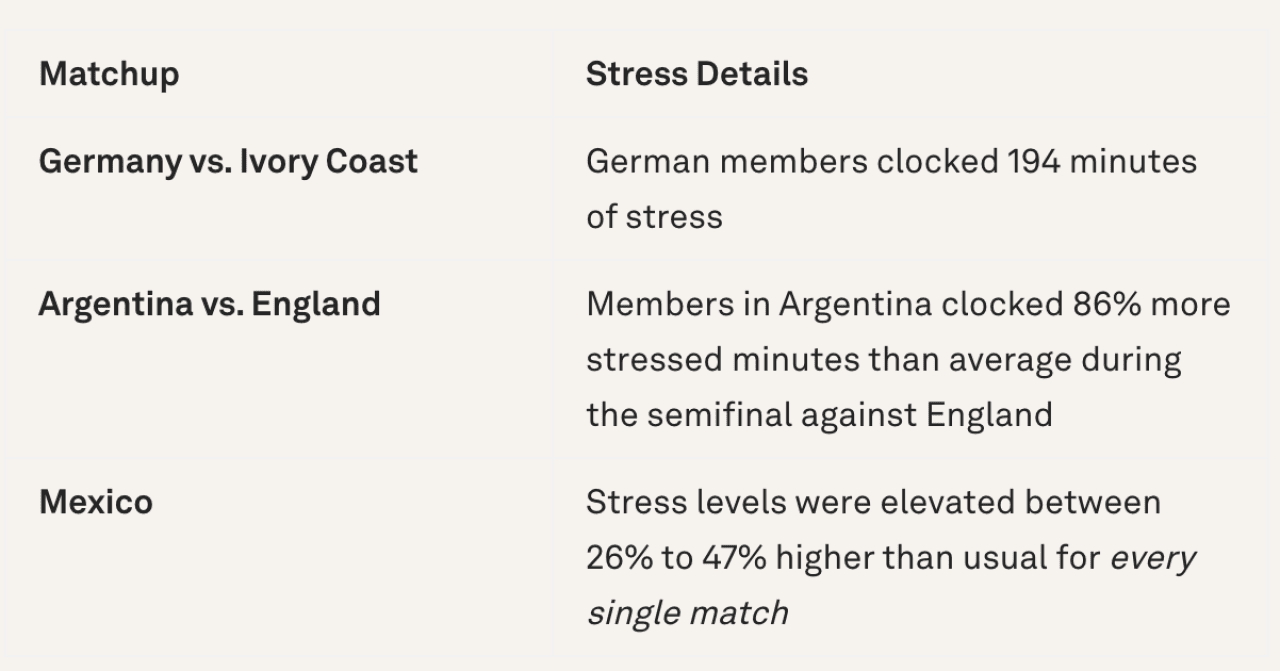
Oura data revealed that deep tournament runs gradually erode physical recovery, and an elimination match delivers a full-body toll the following morning. Norway’s quarterfinal departure was a textbook example of the physiological “heartbreak hangover”:
Throughout their tournament run, Norwegian members saw their readiness steadily decline as the matches grew more intense, culminating in a perfect storm of late sleep, elevated heart rates, and lower recovery scores.
It wasn’t all sedentary couch-watching. The nervous energy and match-day celebrations translated into noticeable spikes in physical activity. Across almost every country analyzed, daily step counts on Oura rose by 8% to 25% on game days.
Whether you are pacing your living room during extra time or staying up late to watch the trophy lift, major events test your body’s limits.
Follow these tips to bring your body back to balance.
This story was produced by Oura and reviewed and distributed by Stacker.


