Tuesday, October 27, 2026
Partly Cloudy, 52°Wind: mph,


Welcome to our new web site!
To give our readers a chance to experience all that our new website has to offer, we have made all content freely avaiable, through October 1, 2018.
During this time, print and digital subscribers will not need to log in to view our stories or e-editions.
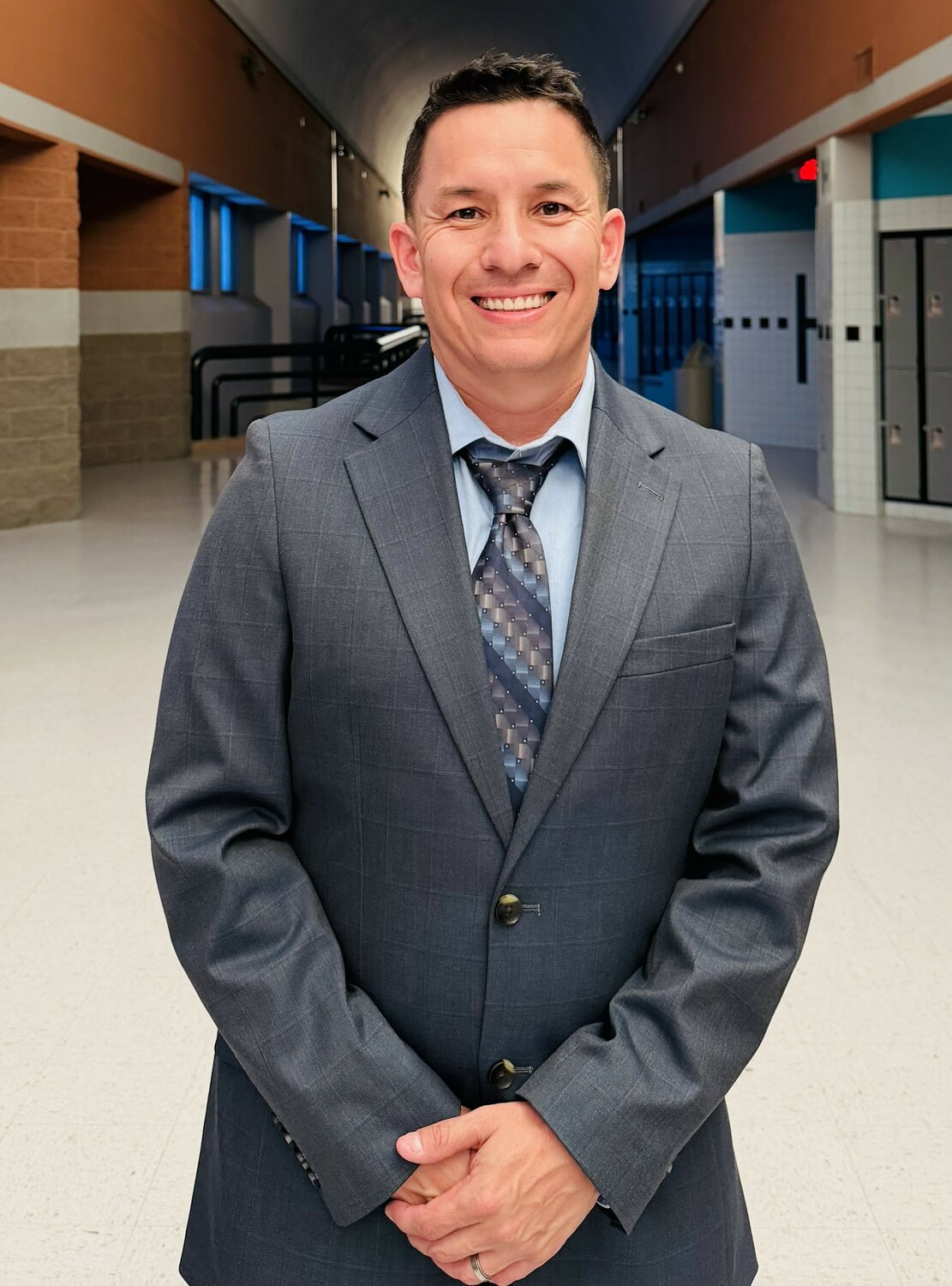
For Adrian Galaz, the hallways at Organ Mountain High School have never really been just hallways. They are memory lanes.
Every corner of the campus carries pieces of the kid he once was — the athlete walking through the old Onate High School halls, the first-generation college student trying to imagine a future no one in his family had yet experienced, the teenager figuring out which voices to follow and which friendships to leave behind.
Now, years later, Galaz walks those same hallways again as the newly named principal of Organ Mountain High School, on the campus calls home, with a perspective shaped not only by classrooms and administrative offices, but by some of the most challenging corners of public education.
“This was always going to be my destination,” Galaz said. “Even when I was somewhere else, I always had my eye on this campus. I said one day I want to come back to the school where I attended as a student. So, to have this opportunity now, as a parent, as alumni and as an administrator, there really are no words for it. This is home for me.”
For Galaz, education was never only about academics. Long before degrees, leadership positions and administrative titles, it began with a teacher who understood the power of making students feel seen.
Growing up in Las Cruces, Galaz remembers being drawn to the classroom of his Vista Middle School math teacher, Mr. Montano, whose walls were lined with Michael Jordan posters and whose personality made students feel welcome before class even began.
“His classroom just felt welcoming,” Galaz said. “He was a great instructor, but it was more than that. He connected with students. He held us accountable and instilled discipline, but he was approachable too. He showed care. And as a middle school kid and athlete, that mattered to me. I remember telling myself, ‘That’s who I want to be one day. I want to be a positive male role model like that.’”
That realization followed him to Onate High School, where he joined a youth tutoring program and began working with elementary students. It followed him to New Mexico State University, where he became the first person in his family to graduate college. And it followed him back into Las Cruces classrooms, first as a fifth-grade teacher at Sunrise Elementary, in the very same classroom he had once attended as a child himself.
Galaz still smiles talking about those full-circle moments, though his path through education eventually took him somewhere far more difficult. After struggling through a challenging year teaching elementary students with behavioral issues, Galaz found himself pulled toward students who were often viewed as the hardest to reach.
“Part of me wanted to walk away from teaching,” he admitted. “But then I said, ‘You know what? Let me dig deeper into this.’ I was spending so much time with two or three students who were struggling, and I thought, if I’m already investing this much emotionally, then maybe this is where I’m supposed to be.”
That decision led him into a district program for long-term suspended middle school students — students dealing with violence, drugs, gangs, incarceration at home and fractured family lives. The program eventually became known as Crossroads, a name Galaz himself proposed.
“I felt these kids were at a crossroads,” he said. “They could go left or right.”
The students arrived carrying labels that often followed them long before anyone tried to understand them. Galaz wanted them to see themselves differently.
When students complained they did not even have a mascot, Galaz suggested the Ravens.
“They were saying, ‘We’re different. We’re the bad kids. We don’t even have a mascot,’” he recalled. “So I told them, ‘What do people think of when they see a raven? They think bad luck, bad omen, dark bird.’ But then we started talking about how ravens are actually some of the most intelligent birds out there. And I told them, ‘That’s how you guys are. People are labeling you one way, but underneath all of that there’s talent there.’”
Years later, he still remembers those students vividly.
“A lot of those kiddos were good kids,” he said. “They were talented. Some were great athletes. Some were artists. Some could write really well. They just maybe weren’t given the same opportunities, or they got labeled for the wrong reasons.”
The memories are not all easy ones. Several former students have since died from shootings or suicide, painful reminders of how fragile some young lives can become when they lose connection and direction.
Those years permanently changed how Galaz views schools and the role adults play inside them. Inside a high school, he sees more than grades, attendance reports and discipline referrals. He sees students trying to find a place to belong before life pulls them somewhere else.
That is why, even as an administrator, he still gravitates toward the quieter students in the hallways, the ones sitting alone, the ones who may not yet feel connected to sports, theater, band or any corner of campus life.
“When I’m walking the hallways, I try to make contact with everybody,” he said. “Not just the high-achieving kids. The kids sitting by themselves too. I’ll stop and ask what they’re playing or what they’re into. Because if I don’t make that daily interaction, they may not get that from anybody else that day. And sometimes that little interaction makes the difference.”
The philosophy is personal because the struggle once was too. Galaz admits there were moments as a teenager when he flirted with the wrong crowd and watched close friends drift toward drugs and bad decisions. He remembers realizing he was trying to live “two different lives” before deciding he needed to step away.
Now, when students sit in his office for disciplinary conversations or restorative meetings, he leans on storytelling more than lectures.
“I tell them, ‘I was just like you,’” he said. “I walked these same hallways. I had friends making those same choices. And you get to a point where you have to decide who you want to be and who you want around you. So, I try to use my own experiences with students because I want them to understand I’m not speaking down to them. I can relate to them.”
Near the end of the interview, Galaz pulled out a drawing he recently bought at a student art auction. The artwork showed a small trailer home sitting beneath a castle. The image immediately reminded him of his own childhood growing up only a few miles from campus in Hacienda Acres.
“I grew up in a small trailer not far from here,” he said. “My dad was a mechanic. My mom stayed home. We didn’t have a whole lot. So, when I saw that painting, it spoke to me. I started talking with the student who painted it, and it turned out his dad was also a mechanic and his mom stayed home too. It was just one of those moments where you realize how connected our stories can be.”
Then he smiled.
“I told him, ‘That trailer reminds me of me. I feel like I went from growing up without much to now being in this castle with you guys.’”
For Galaz, that may ultimately be the job now — helping students see more in themselves than the labels the world tries to place on them. Just as someone once did for him.