Tuesday, October 27, 2026
Partly Cloudy, 52°Wind: mph,


Welcome to our new web site!
To give our readers a chance to experience all that our new website has to offer, we have made all content freely avaiable, through October 1, 2018.
During this time, print and digital subscribers will not need to log in to view our stories or e-editions.
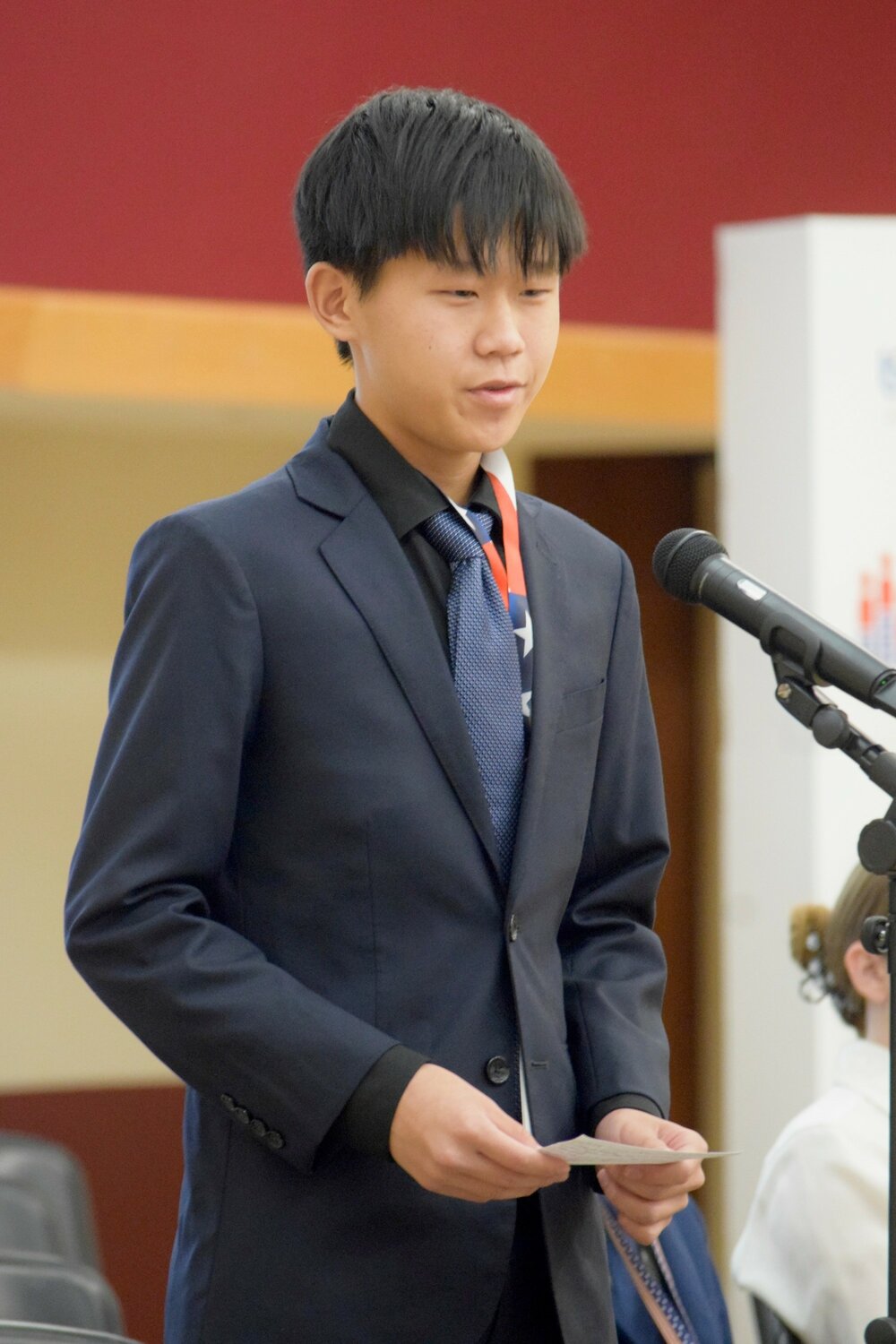



For Mason Schuette, the most surprising part of the Las Cruces Regional Civics Bee wasn't watching middle school students answer questions about government. It was watching the adults.
As students worked through questions on the Constitution, historical documents and civic principles, parents and family members in the audience were invited to play along. Many quickly discovered the challenge wasn't limited to the competitors on stage.
"Afterwards, they're coming up to us and telling us, 'We didn't know any of that,'" Schuette recalled.
For Schuette, who helped organize the inaugural regional competition through The Bridge of Southern New Mexico, the moment reinforced the purpose behind the event. The Civics Bee is about more than testing knowledge. It is designed to encourage young people to think critically about their communities, understand their responsibilities as citizens and develop ideas for solving real problems.
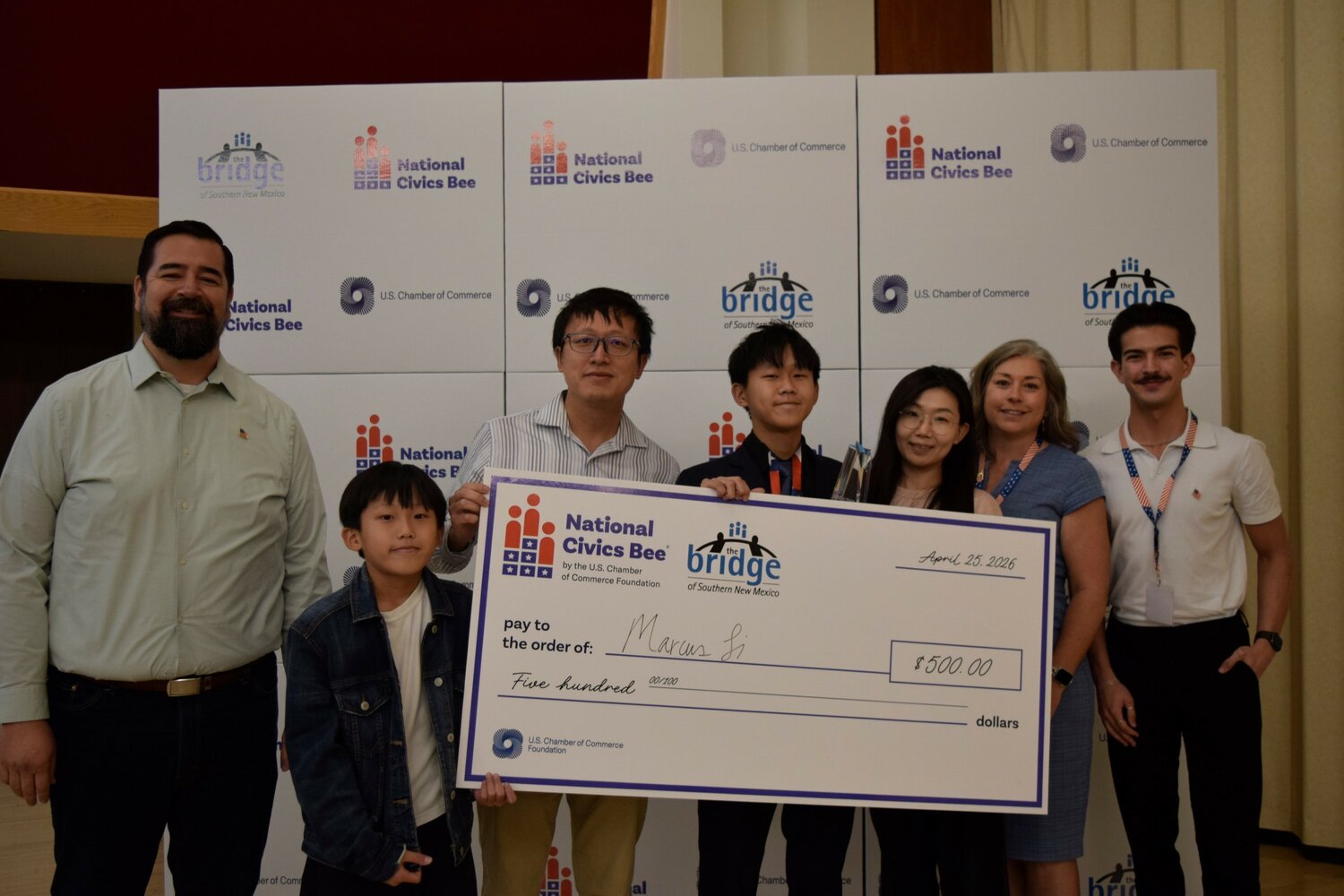
That process led eighth-grader Marcus Li of Camino Real Middle School to a first-place finish in the April 25 competition at New Mexico State University's Corbett Center Ballroom.
The event brought together 20 students from across southern New Mexico who first qualified through a national essay competition. Students were asked to identify an issue affecting their community, research it and propose a solution. Those essays were evaluated nationally, with the top regional submissions advancing to Las Cruces for the live competition.
"To qualify for the initial competition, they pick an area of advocacy they're interested in and answer prompt questions that form the essay," Schuette said. "Those are scored nationally, and then the top 20 move on to our regional competition."
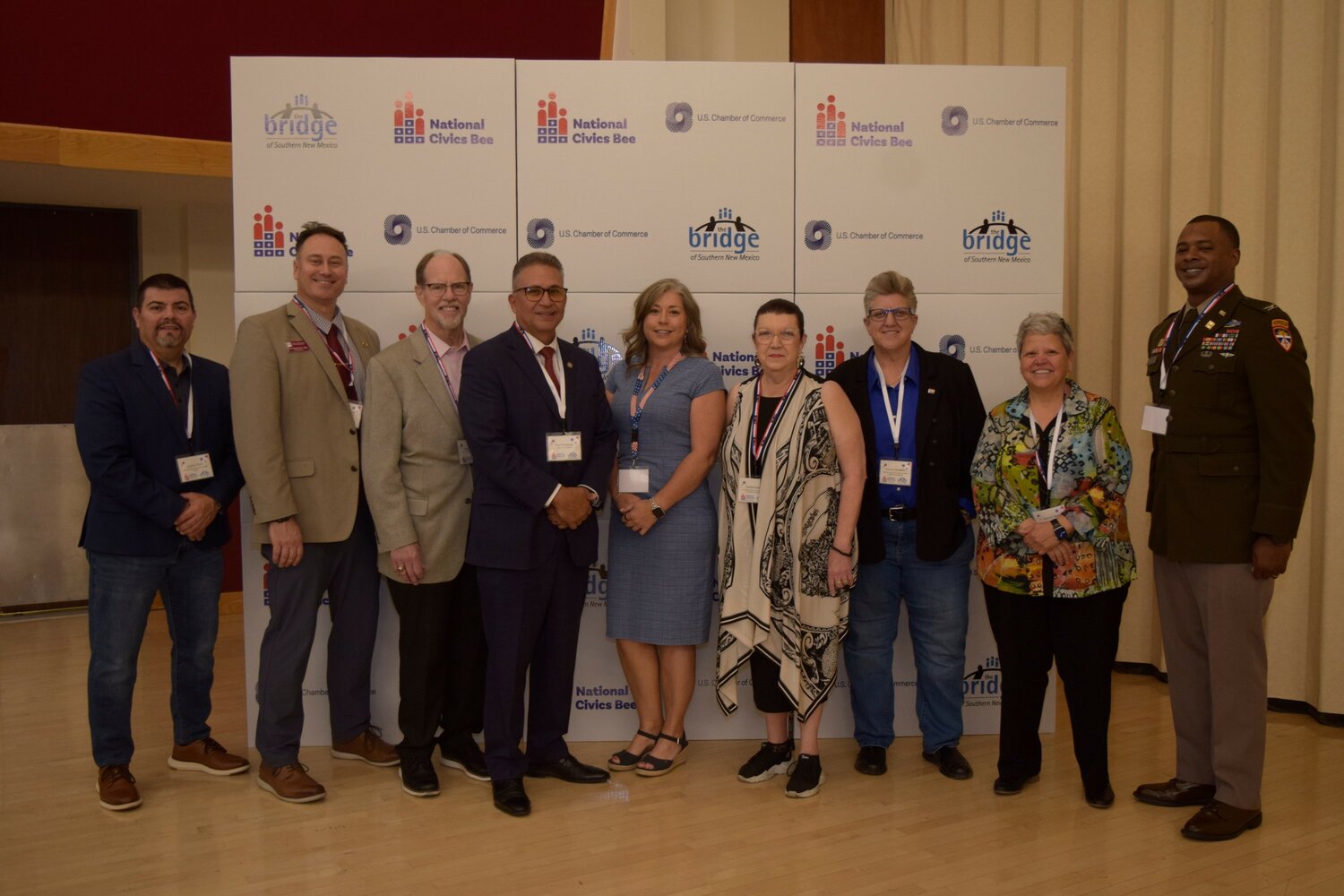
The competition itself unfolded in stages. Students first answered multiple-choice questions covering government, civics and American history. The top five scorers advanced to a final round where they presented their ideas to a panel that included Las Cruces Mayor Eric Enriquez, Memorial Medical Center CEO Dennis Knox, Greater Las Cruces Chamber of Commerce President and CEO Debbi Moore, a colonel from White Sands Missile Range and the dean of NMSU's College of Health, Education and Social Transformation.
Li's topic was youth violence, an issue he said felt impossible to ignore.
"When I was thinking about ideas for my essay, I saw that youth violence was a very important issue," Li said. "It impacted Las Cruces as a community because of things like the shooting at Young Park."
Rather than focusing solely on law enforcement or punishment, Li proposed expanding student-to-student mediation programs in schools. His research drew from scholarly studies and examples of similar programs used elsewhere in the United States and around the world. The goal, he said, is to address conflicts before they escalate beyond school grounds.
"What I wanted to say was that we need more ways to address these conflicts in our school, which can spill over into the community," Li said.
When judges pressed him on implementation and asked why peer mediation might be more effective than traditional adult intervention, Li leaned on his research and preparation. Since the competition, he has continued studying the topic and believes peer mediation can provide benefits that extend beyond resolving immediate disputes by teaching students conflict-resolution skills they can carry into adulthood.
Li said the experience also changed the way he thinks about citizenship.
"I learned more about my rights as a citizen and also about my duties," he said.
Those duties, he explained, include voting, communicating with elected officials, protesting and remaining actively engaged in public life. In his view, addressing community problems such as youth violence cannot be left solely to government.
"Everyone should do everything in their power," he said.
That philosophy mirrors what organizers hope students take away from the competition. Schuette said many of the judges' questions challenged students to connect their chosen issue to larger civic principles and to explain not only what problem they wanted to solve, but why it mattered.
The conversations ranged widely. One finalist proposed expanding opportunities for coed athletics, while another explored how drone technology could improve access to health care in rural communities. The variety of ideas reflected the competition's broader goal: encouraging students to see themselves as problem-solvers long before they are old enough to vote.
Li was joined among the winners by second-place finisher Levi Napie of Truth or Consequences Middle School and third-place finisher Anton Ceasar, also of Truth or Consequences Middle School. All three advance to the state Civics Bee competition June 13 in Albuquerque.
For Schuette, their success represents only part of the story.
This year's competition marked the first time The Bridge of Southern New Mexico facilitated the program, and organizers had less preparation time than many of their counterparts around the state. Still, he came away convinced that the effort is worth expanding.
After all, if a group of middle school students can spend months researching community problems, debating civic principles and proposing solutions, they are already practicing the kind of engaged citizenship missing for so many adults.


