Tuesday, October 27, 2026
Partly Cloudy, 53°Wind: mph,


Welcome to our new web site!
To give our readers a chance to experience all that our new website has to offer, we have made all content freely avaiable, through October 1, 2018.
During this time, print and digital subscribers will not need to log in to view our stories or e-editions.


The story most Americans learn about the nation's founding takes place in places like Boston, Philadelphia and Yorktown. It is a story of tea dumped into a harbor, midnight rides, Continental soldiers and a declaration signed by men whose names became chapters in history books.
It is not usually a story that includes Las Cruces. That omission is exactly what members of the Doña Ana Chapter of the Daughters of the American Revolution hope people will reconsider as the nation approaches its 250th birthday.
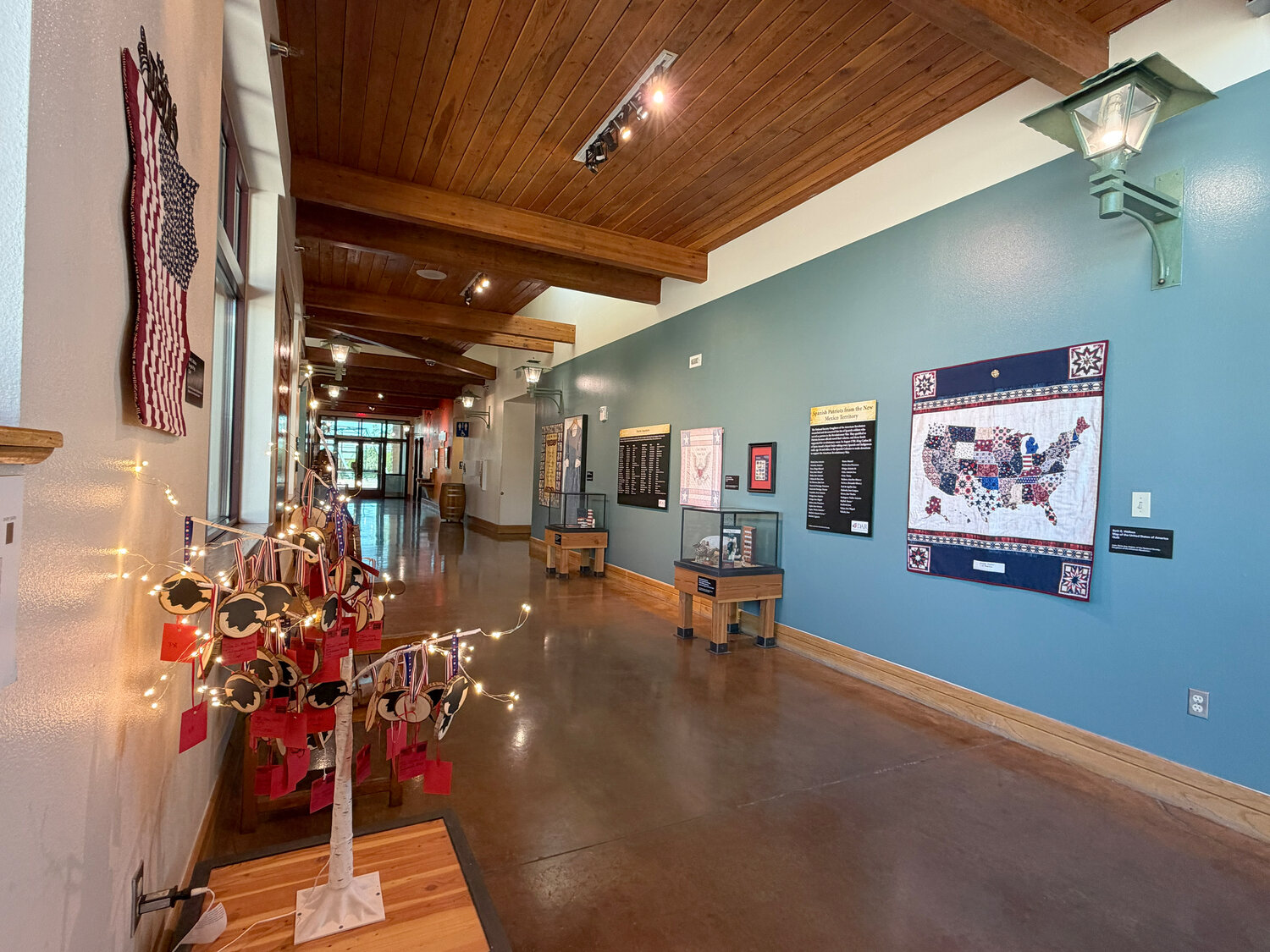
A new exhibit at the New Mexico Farm & Ranch Heritage Museum commemorating the 250th anniversary of the Declaration of Independence invites visitors to look beyond the familiar Revolutionary War narrative and discover a connection many New Mexicans never knew existed.
"We tend to regionalize history," chapter members Mary Lee Bailey Shelton, Linda Bartlett and Beth Wallace said during a recent interview about the exhibit. "When we talk about the American Revolution, we're talking about Massachusetts and the Boston Tea Party. That's how we study it."
The reality, they argue, is much bigger.
Before New Mexico became part of the United States, the people living in this region were connected to events unfolding along the Atlantic coast. Spanish New Mexico was part of a vast empire stretching from Mexico City north through Santa Fe and beyond. Supplies, soldiers and travelers moved along El Camino Real, the historic route that passed through what would eventually become southern New Mexico.
The exhibit highlights a lesser-known chapter of Revolutionary War history: Spain's support of the American colonies during their fight for independence from Great Britain.
According to chapter members, King Carlos III of Spain authorized financial support that helped sustain the colonial cause. Residents of Spanish territories, including those in what is now New Mexico, contributed through taxes that ultimately supported the war effort.
"Even though the American Revolution occurred on the East Coast, the citizens out here had more to do with its success than they realize," the women said.
That connection becomes easier to understand when viewed through the geography of the Southwest. The same trails that carried settlers, missionaries and traders across New Mexico also carried soldiers serving Spain's northern frontier. Historical records document troops traveling north through the Mesilla Valley and stopping along routes that local residents still pass every day.
One such location is Klein Park in Las Cruces.
Today it is a neighborhood park where children play, and motorists pass without a second thought. More than two centuries ago, it served as an important stopping point for travelers preparing to cross the Jornada del Muerto.
"People drive by that park every day," the women said. "You just don't know what happened there. That's part of our mission, to keep history alive."
Last year, the local DAR chapter dedicated an America 250 marker at Klein Park recognizing its connection to the historic route and the Revolutionary era.
For chapter members, that marker and the Farm & Ranch Museum exhibit share the same purpose: helping people see history where they live.
The display includes military artifacts, historic buttons, quilts, clothing and family heirlooms, but it also tells stories that challenge common assumptions about who participated in the nation's founding and where that participation occurred.
Among the featured materials are records of Spanish soldiers stationed in New Mexico and information about local descendants whose family lines trace back to patriots recognized for supporting the Revolutionary cause. The exhibit also reflects another effort that has gained momentum in recent years — uncovering the stories of women whose contributions were often left out of traditional accounts.
For generations, historical records focused largely on military service and public leadership roles held by men. Researchers have since identified thousands of women who contributed to the Revolutionary cause by managing farms and businesses, paying taxes, caring for soldiers, providing supplies and, in some cases, even taking up arms themselves.
"History didn't always record what women did," one member said. "But for every man there was a woman."
The work of uncovering those stories mirrors a broader goal that has guided the Daughters of the American Revolution since the organization was founded in 1890. Today the organization counts roughly 190,000 members nationwide and focuses on three core missions: historic preservation, education and patriotism. Locally, those efforts include student essay and art contests, veterans programs, naturalization ceremonies, historical markers and community service projects.
Yet members say all of those activities ultimately point back to the same objective.
"We don't want anybody to forget," they said. "Everything we do is to remind people and give them more information."
That message feels particularly relevant as the country prepares to mark 250 years since the signing of the Declaration of Independence. For some, the anniversary may be an occasion for fireworks and celebrations. For others, it may prompt conversations about the nation's successes and failures. For the women helping tell this story, it is first and foremost an opportunity to remember.
"Those who formed our government penned words of wisdom," they reflected. "While not perfect or complete, they laid a good foundation to build a great nation on. We must not forget the principles and sacrifices they made. We must not forget the past, even when it's not something to be proud of. We must learn from history and strive to improve."
That remembrance, they believe, should not be limited to famous battlefields or historic cities on the East Coast. The story of America's founding belongs there, certainly. But it also belongs along the dusty routes that crossed the Southwest, at the presidios that protected Spain's northern frontier, and in places like Las Cruces where traces of that history remain hidden in plain sight.
The exhibit at the Farm & Ranch Heritage Museum offers visitors a chance to see those connections for themselves. More importantly, it offers a reminder that the story of America's beginnings did not happen somewhere else. Part of it happened here.


