Friday, October 2, 2026
Cloudy, 69°Wind: mph,


Welcome to our new web site!
To give our readers a chance to experience all that our new website has to offer, we have made all content freely avaiable, through October 1, 2018.
During this time, print and digital subscribers will not need to log in to view our stories or e-editions.
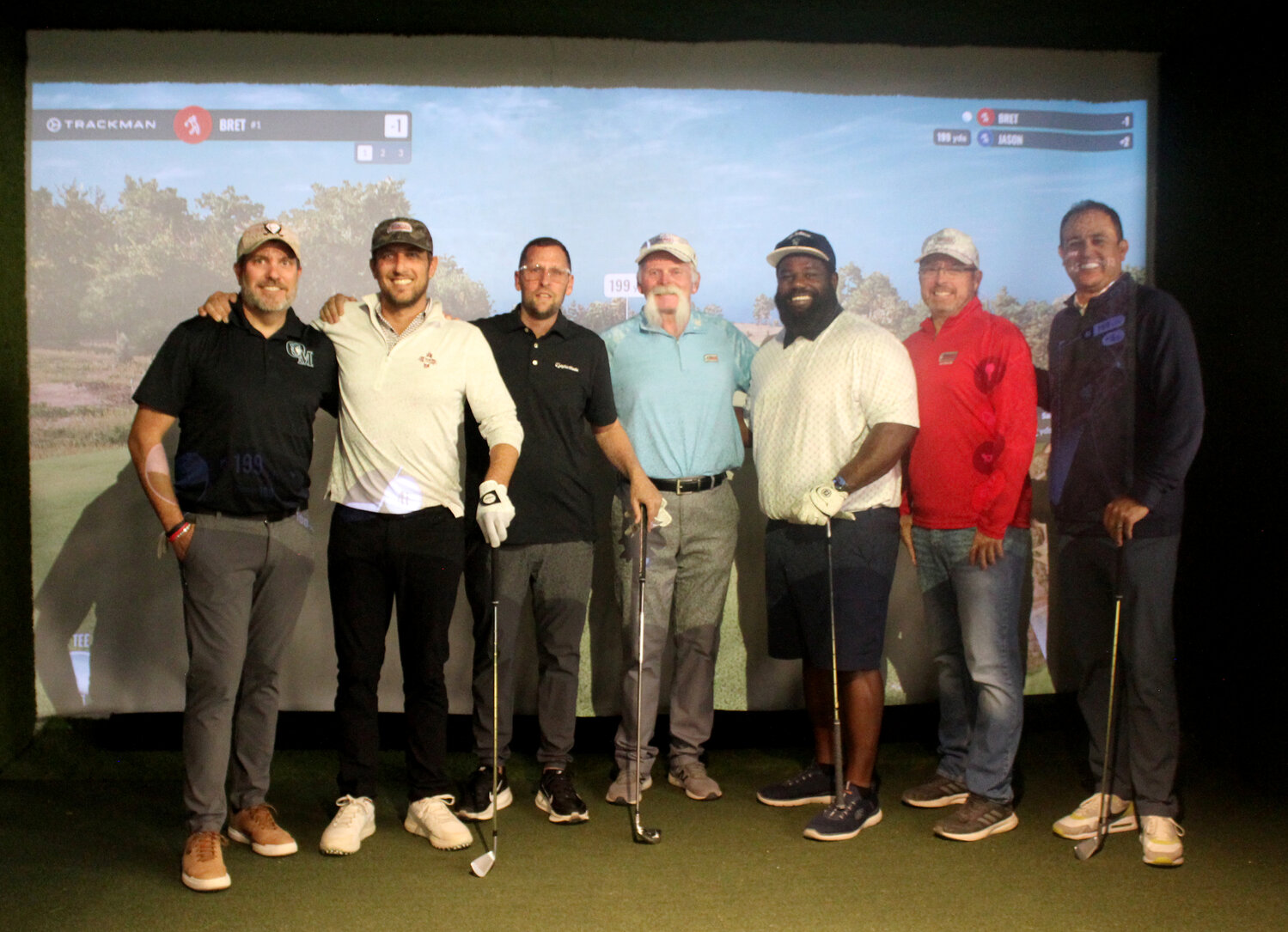


HOPE. Helping Our Patriots Everywhere is the long form for a program that utilizes golf as a means of helping veterans successfully move from active-duty military back into the normal aspects of life. It’s called PGA Hope.
Josh Salmon, who leads the Sun County Golf Foundation, finds joy in giving back to those who have served our country by sharing a sport that brings him so much joy.
PGA Hope is the military flagship of the non-profit for PGA of America, bringing the game of golf to veterans and active-duty military with free golf lessons given by a PGA professional. It is an impactful program to provide free golf equipment, instruction, and playing opportunities for U.S. Military Veterans – especially those who suffer from physical or mental challenges following their years of service. There are currently seven PGA Hope programs spread through Albuquerque, El Paso, Farmington, and Las Cruces.
The Las Cruces program is based out of the golf course at New Mexico State University. Specifically, PGA Hope is a six-week course of free golf instruction given by PGA professionals to enhance the mental, social, physical and emotional well-being of veterans. There are more than 330 programs across the country.
“Our veterans have seen so much more than we probably ever will see,” Salmon said. “The role of the golf in this is it's a therapeutic thing. It’s us creating programming helping these veterans get out of their home to the golf course around other veterans, around golf professionals who want to help them get better. They’re getting so much more out of it than learning how to play golf, they're getting to hang out with people from all different branches of military and share their stories with one another. That’s a huge therapy for them.”
For the golf pros who give their time to the program, it’s about gratitude, and something deeper as they spend time with these heroes.
“Knowing that they put their life on the line every day for however long they served and then to know that we have an opportunity as PGA golf professionals to work with them is pretty cool,” Salmon said. “We like to tell people we're not brain surgeons, we're not doing anything crazy, but PGA Hope is, in fact, helping to save lives of our veterans.”
Dan Hon, the PGA Hope ambassador the Sun Country Foundation, retired from his second career as a plumber in 2017. It was at that point when he turned to golf.
Hon joined the Marine Corps at the age of 17, requiring parental permission to enlist.
“I was just a kid going into a man's world and it was just playing catch up,” Hon said. “I learned to listen before opening my mouth.”
During his eight years that included two tours in Okinawa as well as other U.S.-based posts, he was a heavy equipment mechanic who was often assigned as a platoon sergeant.
Hon start playing golf 2017 after a visit to a Las Cruces driving range. He was living in Missouri when he retired, but his wife preceded him in the move to the warmer environment of southern New Mexico. It was on a visit with her that he tried golf without much initial success.
“One weekend my dad asked me to play golf, and I just couldn't hit anything,” Hon said. “But I hit one ball and that thing went straight in the air and made a right turn, but it was that feeling, that one flush hit.”
Hon was hooked.
“Mentally, it forces you to focus on what you can control,” he said. “It's like that with everyday life for everybody. You should only focus on what you can control. The rest of it is just clutter. I see trees here, I see trees there, but I'm focusing down the middle. You’ve got the bills to pay, the washing machine goes out. Focus on fixing that washing machine. Focus on what you can control and don't worry about anything else. I think that's what golf has done for me is help me focus on what matters right then and right now.”
The biggest part of the program for Hon, is the connection with other veterans, and people in general.
“I never did get out of the house back in Missouri,” he said. “I went to work, I came home, and then I went to work. I just didn't do anything. Every once in a while, me and my wife would go out and have lunch or dinner or something, but I didn't have friends like I’ve got now. I think it's being around other veterans because we get it without saying we get it. We understand.”
That is where Hon sees the therapeutic nature of PGA Hope, just being around the other guys.
Franklin Hamilton teaches history at Las Cruces High School after four years of military service in the Army.
“I've always been a fan of golf, but I was always kind of nervous to get into it,” Hamilton said. “I never played golf. I didn't grow up playing golf. One of my buddies told me about this program. If you want to get into the game of golf and also find the community of like-minded veterans, it’s a really cool program.”
Hamilton has found the community he sought and also fallen in love with playing golf. The lessons offered through PGA Hope give him the confidence to keep improving.
The golf training is set up with one pro working with up to five veterans in five two-hour sessions. They teach all aspects of the game and end up playing nine holes of instructional golf.
“You just feel like you're doing something other than teaching golf,” said TJ McMullin, one of the teaching pros. “You're almost teaching a hobby to help relieve some stress. Every time I finish a PGA Hope, I’m always so thankful. Both the veteran and I needed something and I'm glad it's this.”
Jason White is the executive director at the NMSU Golf Course. He is one of the leaders of the PGA Hope program.
“A lot of veterans end up retiring here and living here,” White said. “I've been doing this for four-plus years, and we’ve probably had close to 200 veterans go through our program at NMSU. It’s amazing. A lot of the veterans in the program have played golf before at some point. but I would say the biggest impact is for the veterans and active military that have never touched a golf club before. I think there's just a draw to it, the challenge to it.
“It's not about how athletic you are, how flexible you are. Some of the veterans have some injuries that they're dealing with but no matter how they are physically, they can play the game. They can swing the club.”
White sees golf as a safe space for them, both physically and mentally.
“I think it's calming, being outdoors,” he said. “I think the combination of the challenge and once they start playing and figuring out how they could best make a swing it gets them really involved in enjoying it.”
White, like others, feels the benefits of the PGA Hope program are a little about the golf, but a lot more about quality of life.
“It's being around other veterans and sharing their stories and meeting new friends,” White said. “I had family that was in the military, but I can't even begin to know what they've gone through when they serve our country. Getting them together the biggest part of it, providing an environment where veterans could be around other veterans, they feel comfortable in that setting as well.”
For more information on PGA Hope, visit SunCountryGolfHouse.com. The organization engages in fundraising efforts, including a 100 holes program that is currently in progress. Friends, family, and anyone who wants to help can donate to the cause by pledging an amount per hole played by a veteran in the program.


