Tuesday, October 27, 2026
Partly Cloudy, 53°Wind: mph,


Welcome to our new web site!
To give our readers a chance to experience all that our new website has to offer, we have made all content freely avaiable, through October 1, 2018.
During this time, print and digital subscribers will not need to log in to view our stories or e-editions.
The bullet had already done its damage. Doctors were treating Adrian De La Garza's injuries. Physical therapists were helping him learn what life would look like after being shot in the line of duty. Friends, coworkers and strangers were telling him how lucky he was to be alive.
Yet much of his attention was somewhere else. There were hospital bills to sort through. Questions about what workers' compensation would cover and what it wouldn't. A daughter headed to college. A mortgage that still came due every month. And, perhaps hardest of all, children trying to understand why videos of one of the worst days of their father's life were suddenly appearing online for anyone to watch.
Recovery, he discovered, is rarely just about healing wounds.
"You want to focus on yourself," De La Garza said. "But you're busy worrying about where the money is coming from and how you're going to pay bills."
Five years later, those memories remain vivid. Not because of the pain from the gunshot wound that sidelined him for nearly two years, but because of what the experience revealed about the hidden burdens first responders and their families often carry long after a crisis fades from public attention.
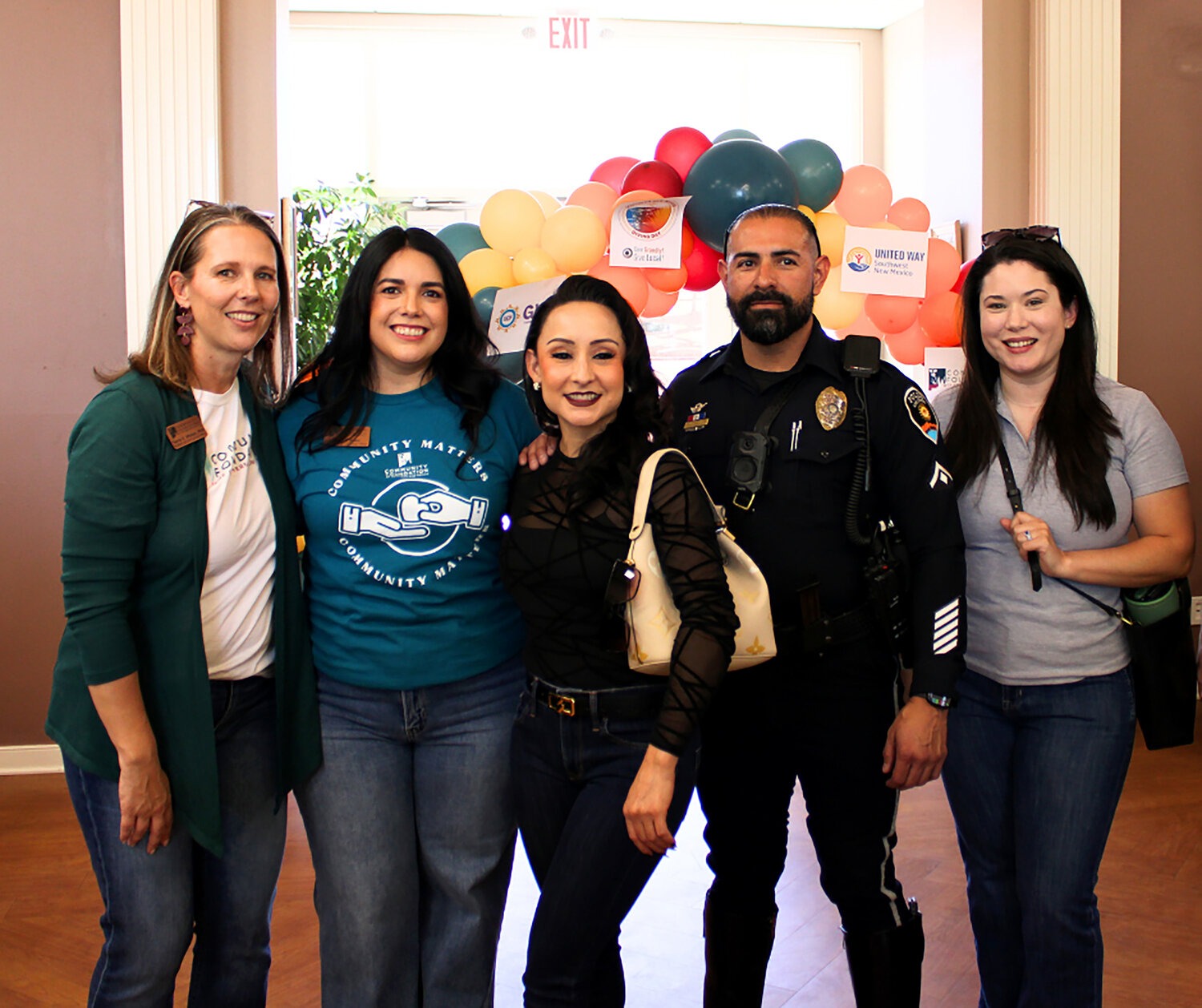
That realization eventually led him to create the Southern New Mexico First Responders Assistance Fund through the Community Foundation of Southern New Mexico, a resource designed to help other families facing the kinds of challenges he came to know firsthand.
But the roots of the fund stretch back to a difficult day in law enforcement that is remembered throughout New Mexico.
On Feb. 4, 2021, New Mexico State Police Officer Darian Jarrott was killed during a traffic stop near Deming. The shooting touched off a massive manhunt that ended hours later outside Las Cruces when officers cornered the suspect. During the confrontation, De La Garza was shot.
The tragedy left one officer dead and another fighting to recover. For a long time, those facts defined the story. What De La Garza remembers now are the families.
He thinks about Jarrott's fiancée, who was pregnant when he was killed. He thinks about the children left behind. He thinks about his own daughters and the emotional toll the shooting took on them. People often told him how fortunate he was to survive, but few understood how deeply the experience affected those closest to him.
The public saw the videos. His family lived them.
As he worked through months of recovery, that perspective began to change the way he thought about helping others. He came to understand that a line-of-duty death or injury creates ripple effects that extend far beyond the first responder. Financial pressures mount. Mental health struggles emerge. Families suddenly find themselves navigating unfamiliar challenges while trying to support someone they love.
He also realizes that those same pressures build up in the lives and relationships of first responders of all kinds who struggle when serious illness is the instigator of the struggle. The fund is also set up to help those families.
Those are the moments when people are most vulnerable, and they often arrive long after the initial outpouring of public support.
De La Garza began wondering what might have eased some of those burdens for his own family. Not just the initial treatment of injury itself nor the trauma that accompanied it. His concern was the weight that came afterward.
What if someone could help cover a hotel stay while a firefighter traveled for cancer treatment? What if a family struggling after an injury could receive help with expenses that insurance didn't cover? What if counseling was available for spouses or children trying to process a traumatic event?
The questions stayed with him. Eventually, they became a mission.
With help from the Community Foundation of Southern New Mexico, De La Garza transformed an idea born from personal experience into a fund dedicated to supporting first responders and their families throughout the region. The Foundation provides the expertise and infrastructure. De La Garza provided the vision, shaped by lessons learned during one of the most difficult periods of his life.
The fund's assistance is intentionally flexible. Sometimes that means helping cover travel expenses for medical treatment. Sometimes it means connecting families with counseling or other resources. Sometimes it means stepping in to relieve a financial burden so someone can focus on recovery instead of worrying about how to meet the next financial obligation.
For De La Garza, success isn't measured only by dollars distributed.
It is measured by peace of mind. It’s in the ability for a wounded firefighter, an injured officer or a family facing a medical crisis to devote their energy to healing rather than surviving.
His ambitions reach beyond southern New Mexico. He hopes the fund eventually grows into a statewide resource capable of helping first responders wherever the need exists.
But each February, his focus returns to the place his individual journey started.
On the anniversary of Jarrott's death, hundreds gather in downtown Las Cruces for a 3.3-mile memorial run honoring Jarrott's badge number, 330. Businesses donate food. Volunteers hand out shirts. Families walk alongside officers. What began as a remembrance has evolved into something larger — a community affirmation that those who serve are not forgotten when tragedy strikes. That, ultimately, is the idea behind the assistance fund.
De La Garza cannot change what happened on Feb. 4, 2021. He cannot erase the hardships his family endured, or the losses suffered by the families of Jarrott and other fallen officers before or since. What he can do is make the path a little easier for the next family that finds itself there.
In that way, some of the hardest lessons of his life have become an opportunity to help others through their seemingly insurmountable challenges.