Thursday, October 22, 2026
Partly Cloudy, 66°Wind: mph,


Welcome to our new web site!
To give our readers a chance to experience all that our new website has to offer, we have made all content freely avaiable, through October 1, 2018.
During this time, print and digital subscribers will not need to log in to view our stories or e-editions.
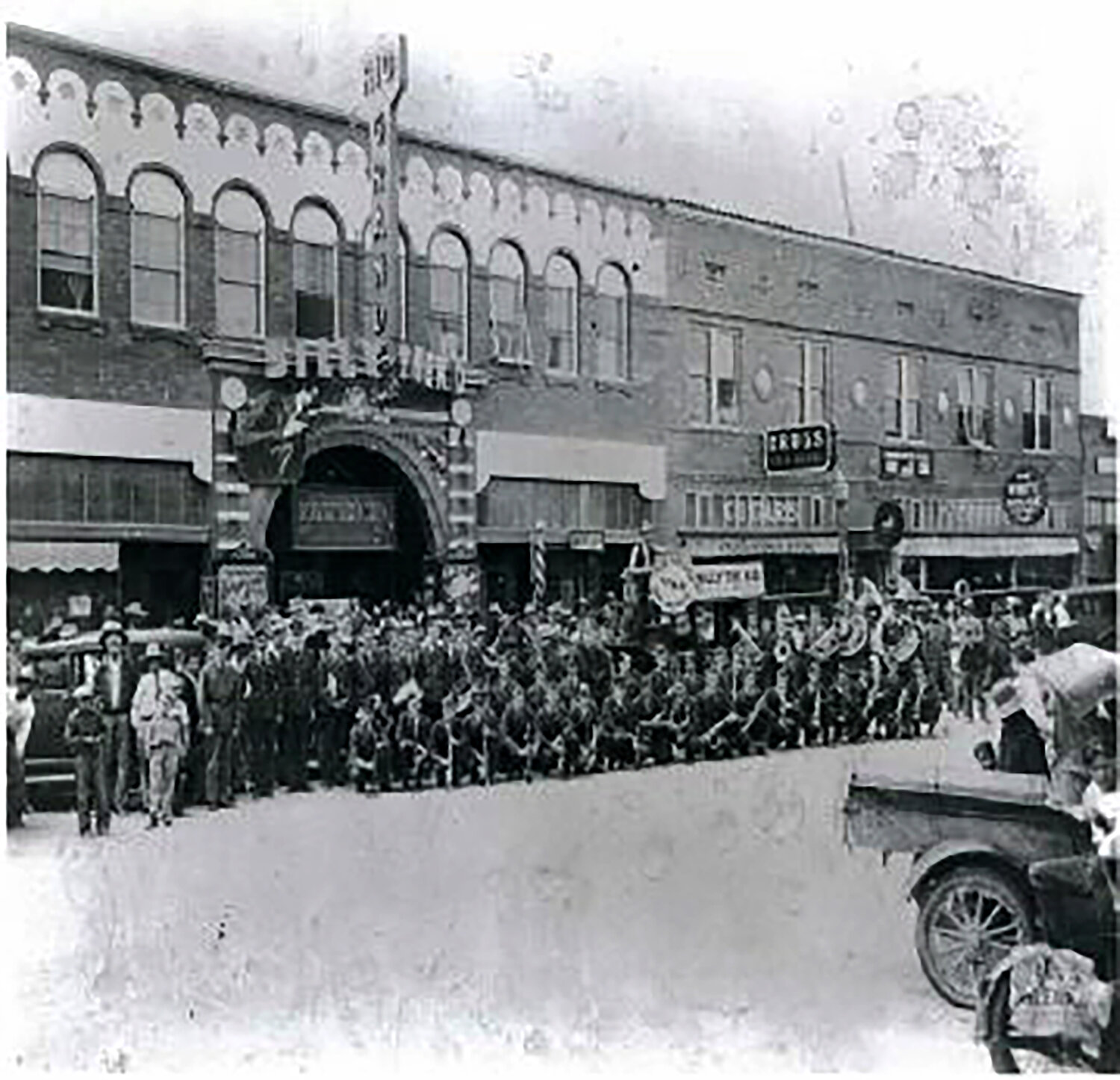


History is about to be made by Las Cruces city officials. Thanks to the Cultural Properties Subcommittee and the tireless work of the Historic Preservation Specialist, five historic properties have been nominated for the City of Las Cruces Register of Cultural Properties.
These historic buildings will go before the city council later this summer, and if approved they will kick off the start of City of Las Cruces Register of Cultural Properties Inventory list.
In a celebrated move in December 2019, the Las Cruces City Council created the Historic Preservation Ordinance (now Chapter 35 of Realize Las Cruces). In part this ordinance charges the Historic Preservation Committee to make recommendations to city council, who ultimately will vote on the nominations.
Some of the key values of having a local historic designation include:
· Heritage tourists are attracted to history, to cultural properties, and to historic districts. They typically stay longer and spend more money, supporting local businesses and boosting municipal tax revenues.
· Historic properties can appreciate at rates equal to or higher than the broader real estate market. Because historic homes are scarce and cannot be replicated, their unique charm and architectural craftsmanship drive strong, sustained demand.
· Preserving culturally significant landmarks anchors a city's unique identity, maintains a tangible connection to the community's past, and fosters civic pride.
· Historic preservation is a form of reuse. It retains the embodied energy of the original materials, while retrofitting existing buildings reduces construction waste to landfills.
Below is a brief summation of the five nominations for our readers, who are encouraged to support these nominations during the council session.
The Branigan Cultural Center
When Alice Montgomery Branigan — wife of Captain Thomas Branigan, a civil war veteran — died in 1932, she left nearly $2 million to the City of Las Cruces, $35,000 of which was earmarked for the construction of a new library with another $10,000 being earmarked for the purchase of books. The Thomas Branigan Memorial Library (now the Branigan Cultural Center) was the first dedicated library in Las Cruces and the only privately funded library constructed in New Mexico during the Great Depression.
This two-story stucco, Pueblo Revival style building was designed by Percy Wear McGhee, Jr., and constructed in 1935. Elements of this structure include vigas and portales, a wooden-spindled grille window cover, arched openings along the bell tower, and a large clay vessel serving as a chimney pot.
The building is covered in a distinctive plaster texture known colloquially as bananitas (little bananas), the signature stucco finish of a local craftsman.
The Railroad Depot
The train spurred economic growth in the Mesilla Valley with the influx of goods and people from the East. Both modern construction materials and new construction methods arrived with the train, and the infrastructure of Las Cruces grew dramatically to accommodate the demands of both newcomers and new business.
The first train rolled into Las Cruces on April 26, 1881, and the entire town of 1,600 people turned out. The current depot, built in 1910, retains all of its character-defining features, specifically the unique wood brackets that support the extended eaves on west and east facades. It remains a significant example of authentic Spanish Mission Revival architecture; one of few remaining in the valley after urban renewal.
The Rio Grande Theatre
This building holds immense historical, architectural, and cultural significance as the crown jewel of the city’s downtown district. Opened on July 29, 1926, during the "Golden Age" of American cinema construction, it bridges our city's rural past and its modern cultural revival.
Built in 1926, this two-story building is constructed of adobe brick and concrete, with a fired-brick veneer front façade modeled in the Italian Renaissance style. Currently it is celebrated as the only operating two-story adobe theater remaining in the entire United States.
The Clara Belle Williams Home
The house at 722 N. Mesquite St. was the home of Clara Belle Williams for 50 years. In 1937, at age 51, Williams became the first African American to graduate from New Mexico State University.
As a student she was segregated from other students because of her race and often had to listen to lectures outside of classrooms and take notes while standing. Despite this prejudice, she received a bachelor of arts in English.
Clara Belle used her home as a base while dedicating more than 20 years to educating Black children at the segregated Booker T. Washington Elementary School.
In 1974 the house became the home of the Arturo and Marcelina Chavez family. Arturo arrived from Mexico as a Spanish-only speaking child. Determined to succeed in his new country he taught himself English. As an adult, he served two tours in Vietnam with the U.S. Marine Corps, became a naturalized U.S. citizen and retired from White Sands Missile Range after 35 years of employment.
In the early 1980s the house on Mesquite Street became the center of Arturo’s entrepreneurial activities as a “chile broker” around Southern New Mexico. Arturo welded a machine to roast chiles. He sold packaged, ready-roasted green chile long before it was ever found in grocery stores.
Phillips Chapel
As the oldest African American church in Las Cruces and one of the oldest churches dedicated to an African American congregation in New Mexico, the Phillips Chapel C.M.E. Church remains a significant part of history for Las Cruces and the Southwest.
Most importantly, since its construction by African Americans and Hispanics in 1911 the chapel has been a focal point for the African American community as a gathering place for community events. It became the center of education for African American families when Las Cruces decided to segregate during the first half of the 20th century and black children were removed from public schools.
Later, the Chapel hosted baccalaureate services for African American students who graduated from the segregated Booker T. Washington School.
The City of Las Cruces is set to join a national movement to recognize and honor the buildings, structures, and sites that are important to local history.
Property owners are encouraged to nominate their own historic buildings. The ordinance and criteria for nominations can be found at https://library.municode.com/nm/las_cruces/ordinances/land_development_code?nodeId=1350253 (pg. 91).
For assistance, contact the Historic Preservation Specialist, Caitlin Beesley, at cbeesley@lascruces.gov or 575-528-3027.


