Tuesday, October 27, 2026
Partly Cloudy, 53°Wind: mph,


Welcome to our new web site!
To give our readers a chance to experience all that our new website has to offer, we have made all content freely avaiable, through October 1, 2018.
During this time, print and digital subscribers will not need to log in to view our stories or e-editions.
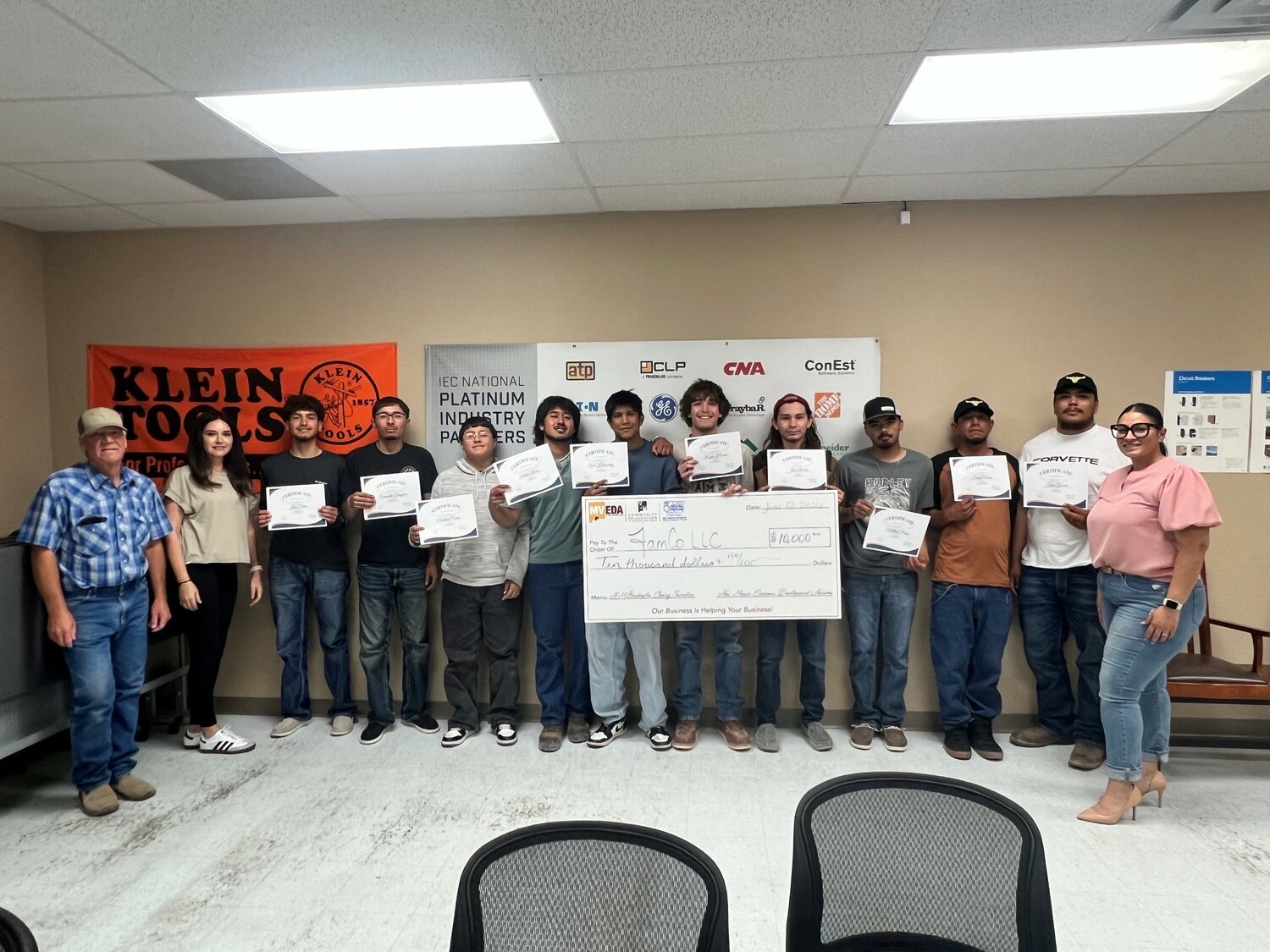


A parking lot doesn't look like much when it's finished. Drivers see asphalt, painted lines and a place to leave their vehicles. Most never think about the calculations hidden beneath the surface, the drainage systems directing rainwater, the measurements that determine whether water pools or flows, or the dozens of decisions required before the first piece of equipment ever arrives on site.
Adrian Lemus sees those things now. A few weeks into a new paid pre-apprenticeship program developed through a partnership between The Bridge of Southern New Mexico and Las Cruces-based construction company FAMCO, the recent Gadsden High School graduate found himself standing on a construction site watching what appeared to be a simple project unfold into something far more complex.
"I learned that, as simple as it sounds, everything is step by step," Lemus said. "Nothing is done overnight. Nothing is done in a week. Everything needs to be planned out perfectly, measured down to the centimeter. Everything needs to be done well in order for a job to be successful."
For Lemus, the lesson was bigger than construction. It was a glimpse into a future he hopes to build for himself.
The pre-apprenticeship program pairs local students with hands-on industry experience while they earn certifications and learn workplace skills. Hosted by FAMCO, a Southern New Mexico construction and civil infrastructure company specializing in heavy civil projects, the program allows students to spend the summer learning alongside experienced professionals while exploring potential career paths.
Lemus entered the program already convinced construction was where he wanted to be. Family members worked in the industry. He spent years fascinated by how things were built and how projects came together. His long-term goal is ambitious: earn a degree in construction management, gain experience in the field and eventually own a construction company focused on large commercial and public projects.
When a friend told him about the opportunity through The Bridge and FAMCO, it felt like a natural fit.
"I was like, 'Whoa, that's perfect,'" Lemus said. "That's what I want to do."
What he didn't expect was how much he would learn beyond the machinery.
Because his interests lean toward management, program leaders connected him with project managers and supervisors working in the field. He has spent time asking questions about budgets, planning, leadership and the realities of managing large projects.
The conversations helped answer a question he had been carrying with him for years. Was construction management really the career he imagined it would be?
Some family members encouraged him to explore other professions. Finance. Business. Different paths that might offer different opportunities. Lemus wanted to hear from someone already doing the work.
One project manager explained the balancing act involved in coordinating crews, engineers, schedules and budgets while keeping a project moving forward. More importantly, he described the satisfaction that comes from seeing something take shape because of decisions he helped make.
"At the end of the day, seeing a project being built together, knowing that you managed the people, the resources and the time for that project, seeing it come together, it kind of just makes you think, 'Wow,'" Lemus said, recalling the conversation. "You know, I helped. I was a major part in that."
That type of exposure is exactly what organizers hoped to create.
FAMCO Director of Training Mailette Lopez said the goal extends beyond introducing students to a career field.
"This program is about giving young people a real foundation, not just exposure," Lopez said. "We want them to walk away capable, credible and career-ready."
The company partnered with The Bridge of Southern New Mexico to launch the pilot program, creating opportunities for students to gain practical experience and better understand the opportunities available within the skilled trades.
For The Bridge, the initiative represents part of a much larger mission. Founded by educators and business leaders concerned about student success and workforce readiness, the organization has spent years serving as a connector between schools, employers and community partners. Over time, that work has evolved beyond graduation rates and into helping students discover meaningful career pathways before they invest years of education pursuing a profession they may not fully understand.
"What I would like to see is as many students as possible placed in quality internships and pre-apprenticeships so they can make better choices about what they want to do with their careers," said Beth Williams, president and CEO of The Bridge of Southern New Mexico.
Williams believes too many students are asked to make life-changing decisions without ever seeing what a profession actually looks like. The solution, she said, is giving them opportunities to explore.
That philosophy can be found throughout The Bridge's growing portfolio of workforce initiatives.
Working with NMSU Global Campus, the organization has developed free online microlearning courses introducing students to careers in healthcare, manufacturing, utilities and the skilled trades. The courses provide a low-risk way for students to investigate different industries, learn about educational requirements and better understand where various career paths might lead.
The heavy-equipment pre-apprenticeship takes that same idea and moves it beyond a computer screen.
Students aren't simply reading about careers. They are standing on job sites. They are talking to project managers. They are watching plans become reality.
For Lemus, that reality has reinforced what he already suspected.
He is considering New Mexico State University, the University of New Mexico or the University of Texas at El Paso as he pursues a future in construction management or civil engineering. Wherever he enrolls, he plans to continue working in the industry while earning his degree. He wants to understand every level of the business, from the workers carrying out the plans to the managers overseeing them.
"I want to know how these things function in and out," he said. "So, when I become a project manager, I'm not missing out on things that happen only on the floor."
The certifications will help. The experience will strengthen his resume. The professional connections may open doors. But perhaps the most valuable thing he has gained this summer is certainty.
A few months ago, construction management was an idea. Today, standing beside active projects and talking with the people responsible for bringing them to life, it feels like a future taking shape.


