Monday, October 12, 2026
Mostly Cloudy, 0°Wind: mph,


Welcome to our new web site!
To give our readers a chance to experience all that our new website has to offer, we have made all content freely avaiable, through October 1, 2018.
During this time, print and digital subscribers will not need to log in to view our stories or e-editions.
Nubia Tarazona still remembers looking at her high school schedule and knowing something wasn't right.
She had arrived in New Mexico from Venezuela at 16 years old, carrying more than a suitcase and an accent. She brought with her years of academic preparation, including biology, chemistry and calculus courses she had already completed. Yet when she enrolled at Roswell High School, she found herself placed in classes that didn't reflect what she knew.
The issue wasn't ability. It was language. Because English was not her first language, the system saw a student who needed support. What it didn't immediately see was a student who was already excelling academically.
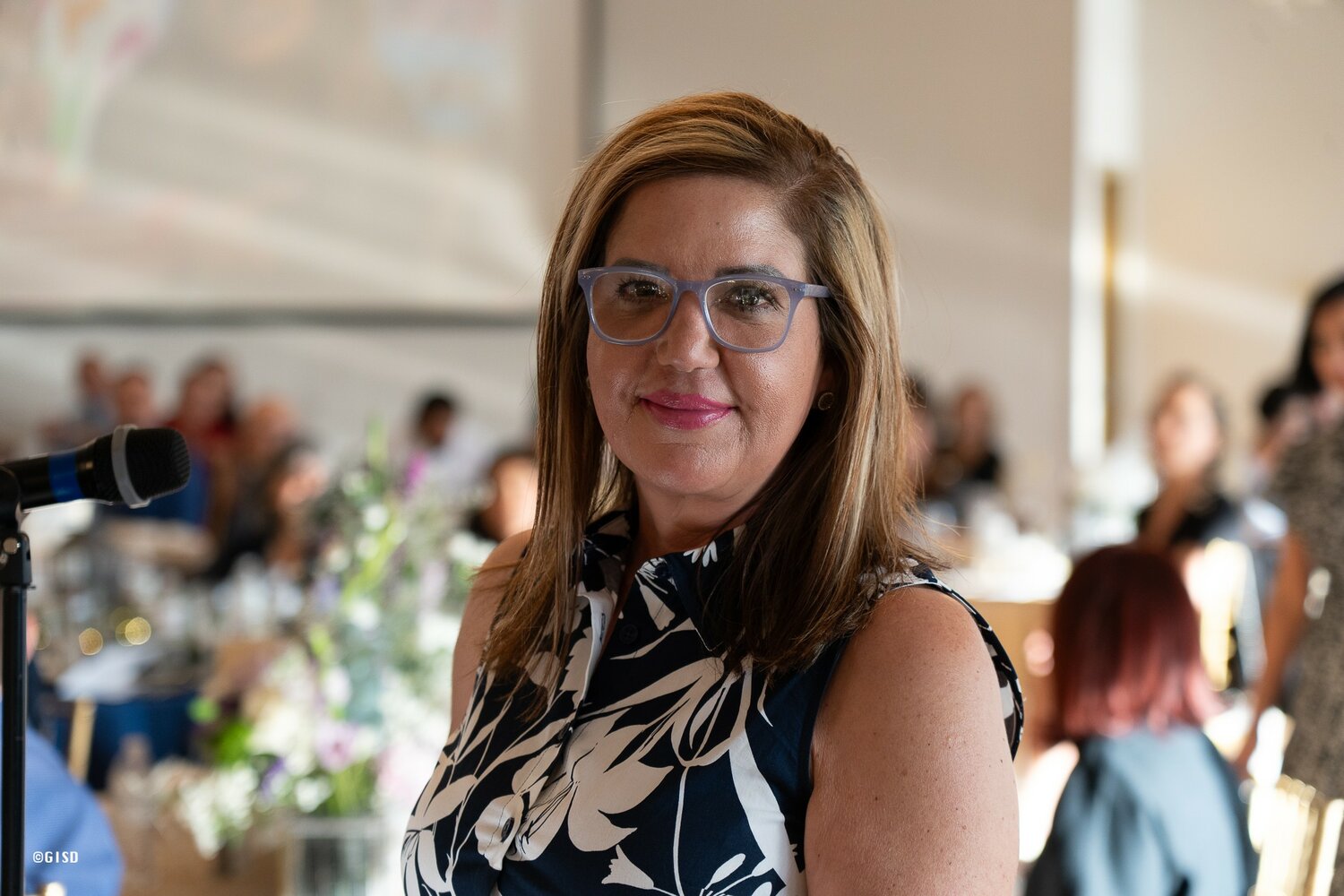
Years later, that experience remains one of the defining influences in the life of the woman who now leads the Gadsden Independent School District.
It shapes the way she talks about student achievement. It influences her views on bilingual education, workforce development and special education. It informs her priorities as superintendent. Most of all, it fuels a belief that has followed her throughout her career: schools must be careful not to mistake language barriers for a lack of potential.
"Just because a student is a second-language learner doesn't mean they can't do the work," Tarazona said. "If I was taking calculus, I wasn't measuring English. I was measuring whether I could do the formula and solve the equation."
That lesson began long before she stepped into an American classroom.
Growing up in Venezuela exposed Tarazona to a very different educational reality. Access to quality education often depended on a family's financial means. Even when public schools were available, costs associated with books, uniforms and other requirements prevented many students from attending regularly. Education was not always the ladder to opportunity that many Americans assume it to be.
When she arrived in the United States, she saw something different. She saw a country that made education broadly accessible and offered a pathway for advancement. It deepened her appreciation for what schools could mean in a person's life.
"Education is the key for everybody to change their life," she said. "If you get an education, you have a future."
That conviction eventually led her into a career spent almost entirely in public education. Tarazona earned her bachelor's degree from New Mexico State University, followed by a master's degree in administration and a Woodrow Wilson Fellowship master's program emphasizing finance. She began her teaching career in Gadsden, later worked in Georgia and Las Cruces Public Schools, and eventually returned to Gadsden four years ago as director of Language, Equity and Cultural Arts. Along the way she served as a teacher, instructional coach, assistant principal, principal and district administrator.
The titles changed. The mission rarely did. Whether she was working with elementary students, supporting teachers or developing districtwide programs, she kept returning to the same question: What happens when schools focus on what students lack instead of what they bring with them?
In Gadsden, that question is impossible to separate from language. Nearly half of the district's students are English learners. For some educators, that statistic might be viewed primarily as a challenge. Tarazona sees it as one of the district's greatest strengths.
She understands the experience personally. Spanish is her first language. She remembers navigating a new culture, a new educational system and the frustrations that come with learning a language while trying to prove what you already know. That perspective has shaped much of the work she has championed in Gadsden.
She talks about bilingualism not as a support service but as an opportunity. She wants students to leave school with bilingual seals on their diplomas, credentials that can open doors in careers ranging from education and business to translation and interpretation. She points to the rapid growth taking place in the Borderplex region and believes the ability to work fluently in both English and Spanish will become increasingly valuable.
In her view, the region's bilingual students already possess a skill many employers are actively seeking. The challenge is helping them recognize it.
"We have this language, this culture and this identity that sometimes we take for granted," she said. "But that's an asset."
That belief has led to expanded dual-language programs, new translation and interpretation pathways and efforts to help students see bilingualism as something that strengthens their future rather than something they must overcome. It is also why Tarazona spends so much time discussing identity.
One of the programs she points to most proudly is a culture and identity course recently introduced at Gadsden High School. Students explored their own heritage, studied the cultural influences that shape New Mexico and even traveled to Santa Fe to observe and participate in the legislative process.
The goal was larger than academic instruction. It was about helping students understand who they are and why that matters.
For Tarazona, education has always been about more than test scores. That doesn't mean data is unimportant. As superintendent, she studies graduation rates, reading proficiency, language acquisition data and assessment results. She knows the conversations surrounding New Mexico's national educational rankings and understands the scrutiny districts face when statewide scores are released. Gadsden students regularly perform well in the most common measurables.
“In Gadsden we have the fortune that we are one of the highest scoring districts in New Mexico,” Tarazona said. “We also have one of the highest graduation rates in New Mexico.”
That said, she also believes success cannot be fully captured by a single test. She talks instead about graduates who continue to college, students who earn industry certifications, young adults entering skilled trades and others finding meaningful careers that allow them to support themselves and their families.
Success, she argues, does not look the same for every student.
"We're all different," she said. "Not everybody is going to go to college, and that's okay. We just want to make sure that when students leave us, they have a way to have a good life."
That philosophy is reflected in the priorities she has identified for the district. Improving math achievement is one focus. Strengthening intervention systems for struggling students is another. Expanding career pathways, supporting special education services and continuing to build dual-language opportunities all sit near the top of the list.
Underlying many of those efforts is a desire to ensure students are being accurately understood.
Tarazona speaks candidly about the need to distinguish between a learning disability and the normal process of language acquisition. With a large population of English learners, she wants educators to carefully examine whether students are receiving the right interventions and whether language differences are sometimes being misunderstood.
The concern stems from her experiences as a teenager in Roswell. Students are more than the labels attached to them. They are more than their test scores. They are certainly more than the language they speak.
Just as importantly, Tarazona believes students need a place where they feel they belong.
One lesson she carried from her years in school leadership is that students thrive when they find a connection to their school community. Sometimes that connection comes through athletics. Sometimes it comes through band, FFA, welding programs, student organizations or career pathways. The activity itself matters less than the sense of belonging it creates.
"All kids need somewhere to fit," she said. "As soon as they find a place to fit or belong, they're more successful."
As she settles into her role as superintendent, Tarazona finds herself leading a district she first entered as a classroom teacher years ago. It is a district facing many of the same challenges confronting schools across New Mexico, including enrollment declines, workforce needs and changing student populations.
Yet when she talks about Gadsden, she rarely focuses on obstacles. Instead, she talks about potential.
She talks about bilingual teachers who have chosen to build careers in their own communities. She talks about students earning diplomas with marketable skills. She talks about creating opportunities that encourage families to keep their children in neighborhood schools. She talks about preparing graduates for a region that is changing rapidly and offering new possibilities.
Most of all, she talks about changing perceptions. Tarazona knows the labels often attached to districts like Gadsden. She knows the assumptions people make when they hear statistics about poverty or English learners. She has spent much of her career pushing back against those assumptions.
Perhaps that is because she remembers what it felt like when people looked at a language barrier and failed to see everything beyond it. Today, she sees something different when she looks at Gadsden's students.
She sees young people who move between languages and cultures with ease. She sees resilience. She sees possibility. She sees strengths that deserve recognition. And as superintendent, she hopes the world sees them that way, too.