Friday, October 2, 2026
, 69°Wind: mph,


Welcome to our new web site!
To give our readers a chance to experience all that our new website has to offer, we have made all content freely avaiable, through October 1, 2018.
During this time, print and digital subscribers will not need to log in to view our stories or e-editions.
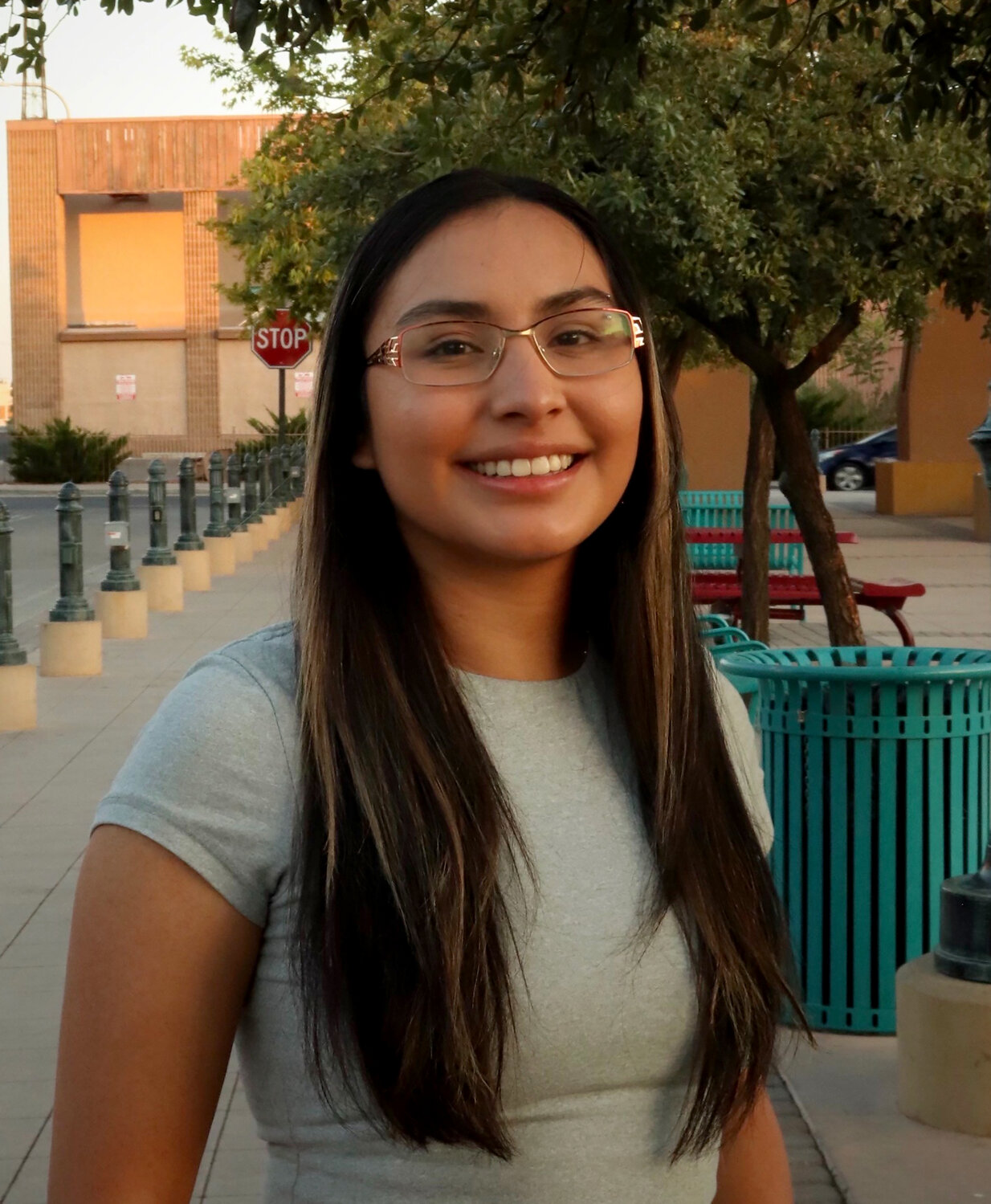
The flashing lights at Young Park first caught Abigail Salas’ attention almost by accident. She was out with friends that March evening in 2025 when she noticed police activity near the park. At first, she didn’t think much of it.
Then her phone rang. Her mother wanted to know where she was.
“There was just a shooting,” Salas recalled her mother telling her.
Soon after, she learned her brothers and a cousin had been at the park during the mass shooting that left three people dead and 15 others injured, one of the darkest days in recent Las Cruces history.
“And so, I immediately knew we’re going to have to cover this,” Salas said.
For Salas, then a broadcast journalism student at New Mexico State University, the story suddenly became both personal and professional. The next morning, she headed out with camera gear and notebook in hand, covering a press conference before spending hours at the park interviewing witnesses and gathering video for what would become an award-winning television report.
That reporting later earned Salas the 2026 New Mexico Broadcasters Association Excellence in Broadcasting Award in collegiate News General Reporting.
But the recognition only tells part of the story. For Salas, the Young Park coverage became a defining moment in learning what journalism looks like when tragedy hits close to home.
“There’s really not,” she said when asked whether journalism courses can truly prepare students for moments like that. “They tell you, you need to be careful because sometimes these stories are going to come your way. But it’s like you don’t know until you’re there.”
Her professors could teach structure, storytelling and ethics. The emotional weight had to be learned in real time.
Nick Miller, a longtime television journalist and former anchor at KTSM-TV who now teaches broadcasting at NMSU alongside Hugo Pérez, said students are trained to approach every story by building a complete picture through voices and perspectives.
“You want somebody to personalize it with,” Miller said. “You want somebody with an official perspective on it, an overview of the whole thing. You want voices from people who were involved with it.”
That philosophy shaped the reporting Salas produced at Young Park. She interviewed her brother, who had been there during the shooting, and Craig Theriault, who had helped one of the victims. She watched veteran reporters work the scene around her while trying to balance urgency with compassion.
“You have to talk to as many people as possible,” Salas said. “But still … being sensitive but being persistent.”
Miller believes Salas’ local roots gave her an advantage in telling the story authentically.
“She knew Young Park very, very well,” he said. “It was something real personal to her.”
He said her familiarity with the park’s car culture and gatherings helped her connect with sources in ways an outsider may not have been able to.
“She understood what was going on out there,” Miller said.
Born and raised in Las Cruces, Salas graduated from Centennial High School, where an influential media program first sparked her interest in storytelling. She initially gravitated toward editing and video production before discovering broadcast journalism through student news programs.
“It was either film or news,” she said. “And I kind of was called to the news.”
Even then, she was drawn less by the spotlight than by the chance to connect with people and tell stories that mattered to the community around her. At NMSU, Miller and Pérez emphasize conversational writing and clarity in storytelling, teaching students to write for viewers who will hear the story just once.
“You just want people to be able to understand something when you hear it one time through,” Miller said. “And also, to personalize the story. Personalizing stories helps connect with your audience.”
Salas absorbed those lessons quickly. Now working at KRWG Public Media, she covers elections, county government, and community stories like Project Jupiter while continuing to refine her storytelling style in both radio and broadcast formats.
“I think my favorite part is whenever you can see their eyes light up when they’re talking about something they’re passionate about,” she said. “That’s my favorite thing. It’s just finding those stories.”
She points to CBS correspondent Steve Hartman as one of the storytellers she admires most — someone known for finding humanity in ordinary people and moments. That instinct has continued shaping her work long after the Young Park coverage.
One of her favorite stories revisited the shooting a year later, reconnecting with Theriault and her brother to see how they were coping after the tragedy. Another favorite focused on artists and community groups creating storage carts for unhoused residents in Las Cruces.
For Miller, students like Salas represent what journalism education can still accomplish, even as the industry itself becomes more difficult.
“To do this work, it’s got to be kind of a mission to you,” he said. “Because especially when you first start out, you’re not going to be treated well, you’re not going to be paid well, and you’ve got to have the idea that this is something I really need to do.”
The 2026 NMBA collegiate awards reflected the depth of NMSU’s student broadcasting program. Along with Salas’ honor, Carpio Griego won awards for feature reporting and videography, Lizzet Leyva earned recognition in sports reporting, Ben Schlittler won for sportscasting, and Jaclyn Ruiz received honors for weathercasting. The student-produced “News22” broadcast also won in the newscast category for a team that included Bodhi Fogden, Ruiz, Schlittler, Griego, Nina Gallegos and Brianna Ramirez alongside faculty advisers Miller and Pérez.
For Salas, the most important lessons from Young Park were never about trophies. They were about learning how to stand in the middle of heartbreak, ask difficult questions with compassion and tell a story people needed to hear, especially when it was her own community living it.


