Tuesday, October 27, 2026
Partly Cloudy, 53°Wind: mph,


Welcome to our new web site!
To give our readers a chance to experience all that our new website has to offer, we have made all content freely avaiable, through October 1, 2018.
During this time, print and digital subscribers will not need to log in to view our stories or e-editions.
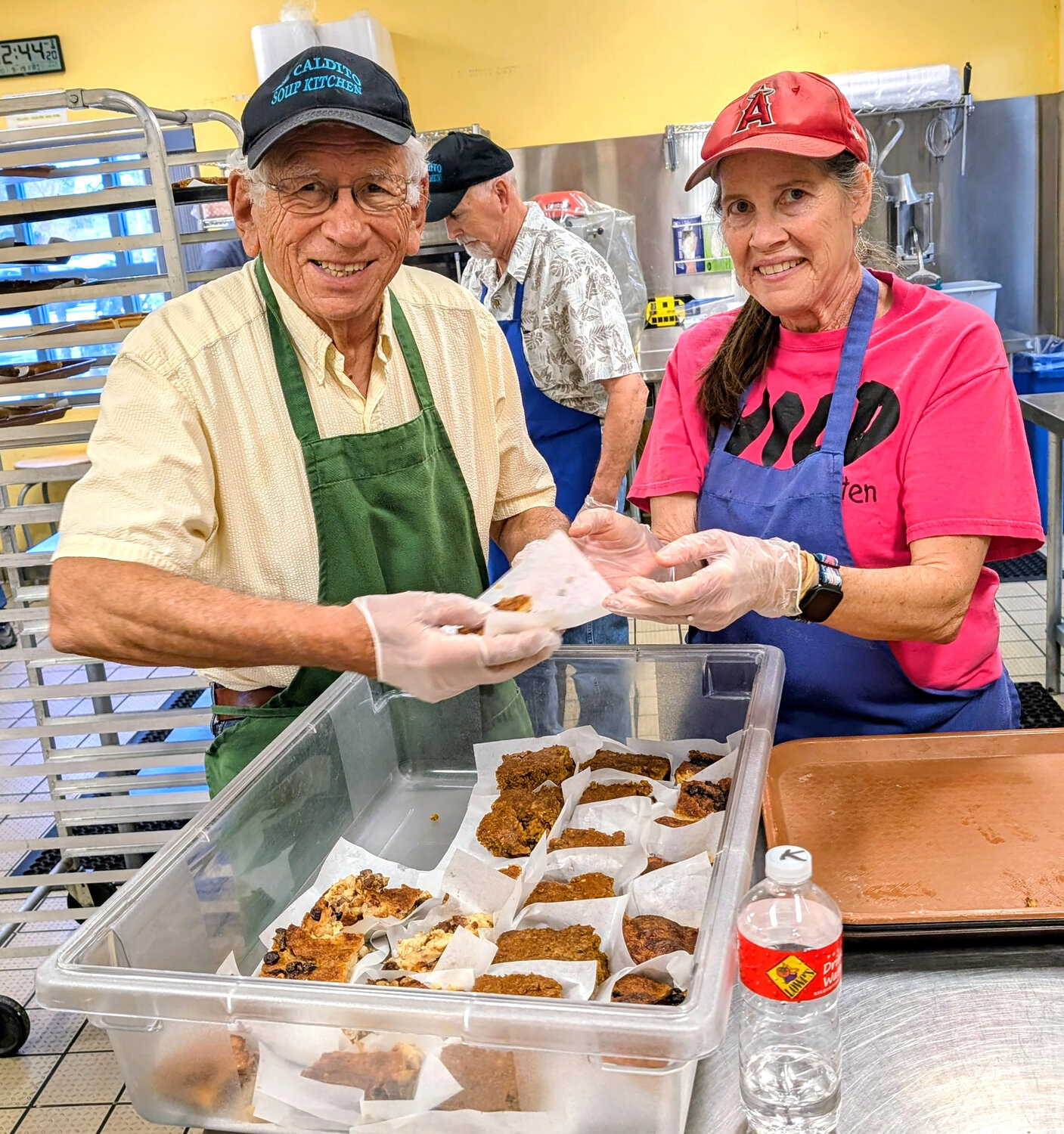


The woman hadn't come looking for lunch. She came looking for somewhere to belong. She and her husband had chosen Las Cruces for the next chapter of their lives, relocating from South Carolina with plans to settle into retirement.
But before they could begin that new life together, he became ill and died. Now she found herself alone in a city where she knew almost no one.
One day she walked through the doors of El Caldito Soup Kitchen and offered to volunteer. Executive Director Steven Chavira handed her an apron and told her something he has learned after nearly two years leading the organization.
"You'll find friends here," he said. "You'll find a family. You'll find a purpose."
By the end of her first shift, she promised she'd be back. That story has nothing to do with hunger. And yet, somehow, it has everything to do with what El Caldito has become.
For 42 years, the nonprofit has been known as the place where anyone can receive a hot meal, no questions asked. But spend any amount of time talking with the people who prepare those meals, and another story begins to emerge. El Caldito feeds people, certainly. But just as often, it restores dignity, builds friendships and gives purpose — to those standing in line for lunch and to those serving it.
It all began in January 1984 at St. Andrew's Episcopal Church. Members of the congregation noticed people in the neighborhood who needed food and decided they couldn't simply walk past the problem. Churches throughout the community began taking turns preparing simple lunches, often little more than sandwiches, and serving them four days a week.
When El Caldito moved onto the Mesilla Valley Community of Hope campus in 1996, the need continued to grow. Friday service was added. Then Saturdays with sack lunches. Eventually churches stepped forward to cover Sundays, making sure no one had to wonder where their next meal would come from simply because it was the weekend.
Today, El Caldito serves lunch seven days a week and breakfast on weekdays, preparing between 350 and 400 meals each day. What once served roughly 80 people daily now reaches thousands each month. More than three million meals have been served since those first volunteers opened their church doors four decades ago.
The organization has grown from two part-time employees to a staff of eight supported by about 160 volunteers. A network of "gleaners" rescues food from grocery stores, bakeries, restaurants, hospitals and retailers across Las Cruces, making sure perfectly good food finds its way onto someone's plate instead of into a dumpster.
Very little goes to waste. Some food is stored for future meals. Some becomes that day's menu. Food that can't wait is immediately shared with guests to take home.
"We use pretty much everything we can," Chavira said. "We have a pretty strict policy on as little waste as possible."
The meals themselves often surprise first-time visitors.
"This isn't the Hollywood version of a soup kitchen," board member Karen Altamirano said.
Board member Alesia Dutton remembers expecting something far different before she became involved.
"What blew my mind," she said, "was that they're open every day. Then I saw the food. It's cooked from scratch. Huge plates. It's delicious."
The surprise doesn't end there.
"The people come through the line thanking everybody," Dutton said. "They're gracious."
That gratitude has stayed with Altamirano.
"We help them retain their dignity," she said. "We make sure they have something to eat until the next day. We don't even know many of their names, but they're thankful."
No applications. No interviews. No questions about income. If someone walks through the door hungry, they eat.
For Gabe Anaya, that philosophy has kept him coming back for nearly three decades. He had retired after a career in education when a friend mentioned El Caldito needed help for Thanksgiving. The friend never returned. Anaya never left.
Today he serves as board president, but he still volunteers in the kitchen every Wednesday and Friday and oversees the Sunday lunch crew.
People often ask why he spends so much time there when retirement offers plenty of opportunities to travel or play golf. He laughs.
"Golf is boring," he said. Then he grows more thoughtful. "I tell people this is not just a soup kitchen to feed the needy. This is a therapeutic center for us retired people. It gives us something to do. It gives us a purpose."
His stories prove the point. He remembers introducing visitors to volunteers washing dishes one afternoon. They included a retired Navy captain, a physician and a geologist.
"They looked at me and said, 'You have a very overeducated volunteer group,'" Anaya recalled.
On another day, a retired businessman from Maine walked in looking for something meaningful to do after moving to Las Cruces. Before long he had reorganized the pantry, cataloged every can on the shelves and eventually joined El Caldito's board.
A retired attorney became a Friday cook. A Navy veteran who had cooked during his military career stepped in after another volunteer moved away. Medical students from Burrell College regularly spend weekends serving meals.
"They come from every profession," Anaya said. "You never know who's going to walk through that door."
Sometimes it's someone looking to serve. Sometimes it's someone looking to survive. Chavira still thinks about Kevin.
Kevin had been coming to El Caldito for some time when one day he walked in beaming.
"I've had the best day ever," he told Chavira.
He had just received the keys to his first apartment. After living without a permanent home, he finally had a place that belonged to him. The first thing he planned to do was call his mother.
"The peace of mind on his face," Chavira said, "just knowing he had a place that was his. That stays with you."
Anaya tells another story. Three years ago, dozens of migrants from Venezuela began arriving at El Caldito carrying little more than backpacks. Among them was a young man named Javier.
By his second day, Javier was restless. He didn't want charity. He wanted work. Anaya invited him to volunteer in the kitchen.
Soon local contractors discovered dependable workers were gathering there. Javier found steady employment, began sending money home to his mother, reunited with his girlfriend after helping her immigrate legally, and eventually began an apprenticeship as an electrician.
"You never know who you're going to come across," Anaya said. "You never know what their needs are."
Those stories explain why Chavira believes El Caldito's greatest challenge isn't simply finding enough food or enough volunteers. It's making sure people know the organization exists.
Even now, he regularly meets longtime Las Cruces residents who have no idea the soup kitchen serves meals every day of the year.
"All we need every single day are food, people and money," Chavira said. "Those are the three things we look at. It's like a three-legged stool. If one gets weak, the stool gets wobbly."
That need is perhaps nowhere more visible than during Empty Bowls, El Caldito's signature fundraiser and one of Las Cruces' most beloved community traditions.
Each fall, members of the Potters' Guild of Las Cruces spend months creating more than a thousand handcrafted bowls while local restaurants donate dozens of soups. Visitors choose a one-of-a-kind bowl to take home before sampling soups from across the community, with proceeds benefiting El Caldito.
The partnership began more than three decades ago after local potter Kelly Williams brought the Empty Bowls concept from Michigan and asked whether Las Cruces could make it its own.
It has. Today, organizers say the Las Cruces event has become one of the nation's most successful Empty Bowls fundraisers, not simply because of the money it raises, but because of the community that gathers around it.
For Chavira, that community is the real story. People often arrive at El Caldito believing they're coming to help someone else. Many discover they're the ones being changed.
A widow finds a family. A retiree discovers a purpose. A man celebrates the keys to his first apartment. A migrant begins building a new life.
And every afternoon, hundreds of people leave carrying something as simple, and as profound, as the certainty that, for one more day, they won't have to worry about where their next meal will come from.
After 42 years, that's the quiet work of El Caldito. It has never been just about serving lunch. It has always been about serving hope.


